Wednesday, June 12, 2013

How to Drink Vodka (Western Realm, Russia)


After crossing the expanse of Siberia we came to the western realm of Russia. Here we visited the cities of Moscow, St Petersburg, and Novgorod. And there was more vodka…


Moscow:
 
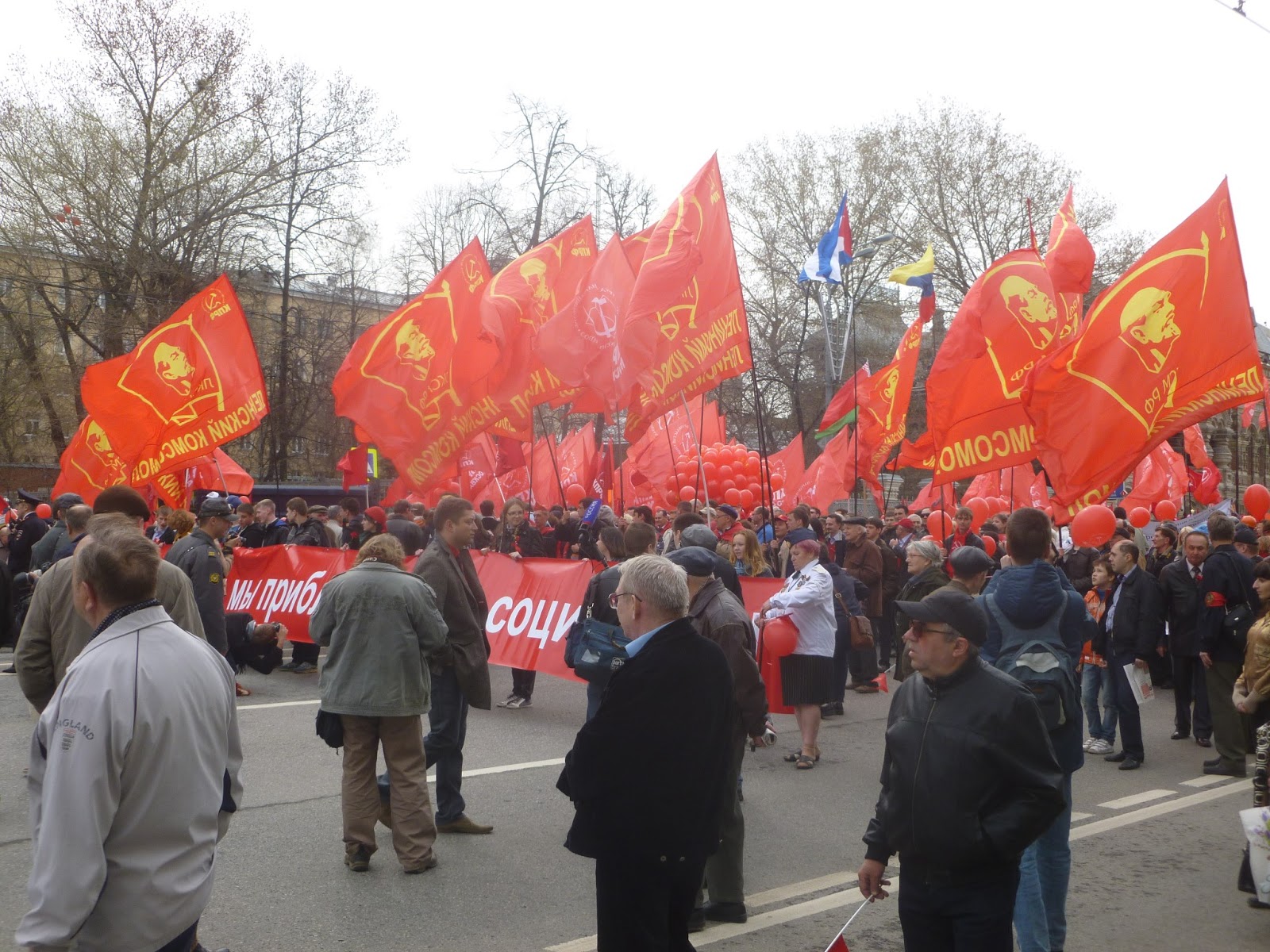
The capital city is a beast. It took me a few days (I had six in total) to get some sort of grasp on the place. In my time I wandered the red square, which is the centre point of town which faces St Basils church (yeah, that crazy and colourful one above) and the Kremlin (ancient and present government headquarters). This part of the city was amazing and the onion dome churches blew me away. I also had time to visit a pro-communist march at the ‘Victory Day’ public holiday parade, in which I got caught on the wrong side of the barricade and for a while was walking down the street amongst the flag waving and song chanting communist supporters. And I even had a red shirt on that day! I was amazed and a little bit concerned to see how many young people, my age, who were marching with flags and photos of Stalin. They are a significant minority, but it just goes to show the communist old days are looked upon as the good old days by many people, some who weren’t even alive.


St Petersburg:

The ‘second capital’, known as the ‘window into Europe’, this was my favourite Russian city because it was like walking through a museum. And the museum in the city was one of the best ones I’ve ever been to. It was bloody cold at the time, but I was just happy walking around the canals and seeing the churches. I had never expected a Russian city to look so much like Venice.


Novgorod:

This is the ancient capital and the oldest inhabited place in western (and maybe eastern) Russia. Yeah, the heritage was interesting, the churches were cool, the graveyard was pleasant and the river was pretty, but all I wanted to do was get naked. And I did.

 
A Banya is a Russian bathhouse where you go for a thorough scrubbing, a sauna, a soap, and to be whipped across the back, legs, arms and feet by birch leaves. If your tough, they’ll bring out the oak leaves. I was the only one in my company who wanted to do this so I got dropped off at the place by myself and lets just say the hour that ensued was…memorable. I’m glad I did it because it was probably the most genuine and local thing I could have done in that town – judging by the looks of the forty something naked men, mostly old, they don’t get many foreigners into these places. And its a staple of Russian culture. But the things I saw, both funny and frightening, will stay with me until the day I die…

I don’t have a picture of forty naked men with me squeezed in the hairy and sweaty bunch, so here’s a picture of me wandering a graveyard instead.

What did I eat in Russia?

Buckweat, potato, Borshe soup (beetroot based broth), fish soup, piroshky, chicken kiev and the thing I liked most, especially with a vodka shot, was lard. Just good old fashion fat. Yum. For breakfast salami, cheese, tomato and hot dog style sausages were the norm. (oh how quickly I came to miss spicy Asian food).

I also ate pickles.

I drank vodka, and I know it sounds dumb and typical, but this Russian stuff was actually way better than anything I’ve ever tried at home. It was smooth. And this is how you drink it. Pickle in one hand, vodka in the other. Three steps:

1.       Sniff the pickle until that salty stench is all the way down the back of your throat;

2.       Gulp down the vodka until your eyes water and you’re on the verge of gagging;

3.       Bite into the pickle and chew it vigorously, neutralising the burning effect of the spirit.

When there’s no salami and cheese, this is the breakfast ritual.  And that’s how life expectancy can reverse.

From Russia with love.

Monday, June 10, 2013

The Tran Siberian Railway (Siberia, Russia)


After a six hour wait at the border, our train rolled on through into Russia.

Russia is a mystery wrapped around an enigma inside a riddle, said Winston Churchill. Classed as neither European or Asian, the world’s biggest country straddles the continent with its expansive wilderness, Siberia, known as the ‘lungs of Eurasia.’  It’s a truly epic country to venture across.

But you know what? This country is a joke.

Where do I even start?

Thanks to corruption, which festered out of control in the communist times and has carried on since, this is a country going backwards. Once a superpower of the world, Russia now has a crumbling economy and a life expectancy that is decreasing each year. For a country with so many natural resources and former wealth, which is funnelled to a small per cent of corrupt individuals in the cities to west, its bewildering how many people in the west and backwaters of the country are starving.

The government runs the media and has no valid opposition. That's a problem. In Russia you don’t talk about corruption – you don’t even say the word. Don’t even think about questioning Putin. People go missing, and that’s no exaggeration. Russia ranked second last on the World Transparency list for 2012. Political critics call Russia a ‘mafia run state.’

After China and Mongolia, I’m sick of government overcontrol and corruption, but here we are again, at the world capital for both. New pet hate.  

On our first morning off the train we visited a small ‘Old Believers’ village. These folks are descendants of the people who were exiled to Siberia because of their religious convictions; communism tried to exterminate religion and even turned a few churches in the big cities to the west into Atheism museums.

This village was interesting to see, and we met some of the local grandmothers (babushka’s) who took us into their little home, fed us up with more food than we could eat and poured us shot after shot of homebrew vodka. Yep, this was lunch time. The women complained about their pension and spoke about their grandchildren and how their husbands had died (probably from drinking too much of this drain cleaner, I thought. And it’s true, alcoholism is absolutely rampant in Russia, especially Siberia). Of course, they spoke only Russian, but we had a guide who translated for us.


Next we went and spent a couple of days on the shores of Lake Baikal. This is the world oldest, deepest and largest freshwater lake. It’s as big as a sea and it’s easy to spot on any world map. The whole thing was frozen over solid, and it was so endless that it looked like Antarctica. It was so beautiful to see it at the different times of the day and just go walking around on the big white plain. Not far from the shore was just pure silence punctuated by the occasional creak or crack of ice.


There were plenty of cars driving across the lake and many people ice fishing – the rewards of which we had for dinner one night (with the compulsory vodka shot, of course).  Baikal blew me away.


The Trans-Siberian Railway is the world longest railway and our longest stint between getting of was 3 nights. That’s a long time to be cramped in a small, four person sleeper cabin. And I would love to say that the scenery was breathtaking, but for the most part it was a boring blur of pines and birch trees. I occupied my time by reading, writing, trying to learn some Russian and sleeping.  I took of my watch because we were passing through a different time zone every day, and added with the really long dusks this high up, my sense of time became so warped in nearly felt like I had jet lag without even being on a jet.

For food we stocked up before we boarded and thanks to the availability of water at the end of each carriage I had noodles for most meals. I got as creative as you could with no refrigeration and limited space for three days; see photo of my glorious carrot and pepperoni noodles. That was by far the best part of that particular day.

We stopped at small towns to break up the journey. At one we wandered around the small river town and visited a lady who did a little cooking demo for us. She then called her daughter downstairs and they sang for us. At another, less pleasant stop, we visited a Gulag. Gulag were the prisoner camps of the communist times, set up across the whole of Russia, but mostly Siberia for common crooks, but mostly as a form of exiling the intelligentsia; writers, artists, professors, scientists, etc, who went against the communist values. They were simply arrested and shipped out to one of these camps (or if they were a real threat then they were killed). That was the communist solution to the problem of dissent. And it worked for a good. Shockingly, the last ‘political prisoner’ to leave the Gulag we visited was 1992.  As I said, this country is a joke.

But I say that not in reference to the common people. The woman and her daughter who sang for us, our hosts at Baikal, the people we met on the train, the old ladies in the village: these are all normal people like you and me but they are so caught up in the system that they just have to suffer the consequences and get on with it. Russians have the reputation as being grumpy and cold – and for good reason I think! But the locals I met were warm and friendly if you could get past that protective exterior. And that’s just more reason to be angry about the few people in power who are letting the rest of them down.

Once again I’m brought back to the thought that Australia is a good place to be born and Japan is downright utopic. And even though I think it’s a ridiculous thing to do, I’m glad that in Australia the Prime Minister can get pelted with sandwiches from school children. I think it’s important.

And the Trans-Siberian express rolls into the West…

Friday, June 7, 2013

Life in a Tent (Mongolia)


From Beijing I boarded a train that would take me nearly 10,000kms to St Petersburg, Russia. To get from China to Russia the train goes via Mongolia. This is a country that I’ve wanted to visit for some time and it didn’t disappoint.


A Buddhist prayer shrine in the hills
After the torturous middle-of-the-night immigration and customs processing, our train rolled on into Mongolia. Waking up in Mongolia it was interesting to see the landscape change so dramatically; this is high country of rolling hills. There are no trees, just grasses, and it’s all pretty dusty. Even in the train, the dust from the Gobi desert got into our compartments (which sleep four people) and into everything.

 It wasn’t too long before I started to see what I’d be seeing the whole time in Mongolia – Gers ( the tent like nomad homes) occasionally on a hill in the distance, and bands of horses roaming the lands. It’s the lowest population density on earth, purely because the soil is so unproductive that folks have to graze their animals on an enormous land area to survive. And that dictates their diet, which is largely meat (lamb and horse mostly, beef and chicken sometimes), without many vegetables save for potato. One night I ordered a lambs head and it included everything; eyes, brain, and most interesting to eat, the tongue.

What surprised me was the soviet era apartment blocks seemingly in the middle of nowhere. This would be the beginning of a long stint in ex-soviet countries, and unfortunately for Mongolia these hideous building (and corruption) are apparently remaining keepsakes from the old commie days.

Ulaanbaatar is the capital and it says a lot about this country. It is very quickly developing, and you can see multi storey building being built right next to Gers. For 2012 Mongolia had the world’s largest GDP growth rate. This country is going through a massive mining boom which is powering their economy. Another trend is urbanisation; people are moving from their nomad country lifestyles into the cities, or should I say the city. And strangely, some are still living as they would in the middle of nowhere, with their Gers right next to busy roads, soviet apartment blocks and interspersed throughout the city and its immediate countryside.

Interesting, just out of town we saw anti-ballistic missile launchers being set up on a high hill. Even the Mongolians were nervous about North Korea.
We went out to a national park which had more dramatic, alpine scenery and did a hike and stayed in a Ger. It snowed but the Gers were perfectly warm and quite cosy. It was a beautiful location and my stay in the Ger was one of the highlights of the trip so far.


Oh, did I mention how crazy they are about their warlord ancestor Genghis Khan? Yep, he's even on their currency (which I had to use as toilet paper in one very unfortunate situation).
It’s a cool way to live and I’m glad to be able to see it before the country modernises and blends into the rest of Asia.

And we continue on the train headed for Russia…


Friday, May 3, 2013


The Courthouse Residency       (Beijing, China)


I chose to bunker down in Beijing for a while and found a traditional courtyard to stay in. This is an almost decrepit building in an old alleyway part of the city, with a big enclosed central area and two levels of rooms around the perimeter. A private room with an ensuite cost me the grand total of $12.70 per night, so I couldn’t complain, nor was I surprised, when I found a tied off plastic bag holding the shower head together, which was so insufficient that having a shower made me colder, or when the staircase shook as I walked up it, or when I patted my bed plumes of dust floated upwards (the smog gets in everywhere and then the shit settles, making everything dusty with a grey tinge).

So why would I bunker down so long in the one spot? A few reasons; firstly because travel is exhausting, especially when you’re not being led around with thirty other sheeple on a coach tour. When you gotta do all the work, the day to day planning, it’s more spontaneous and more real experience, but it’s obviously harder work to get around, communicate, not get ripped off, getting to know a place and seeing all there is to see, etc. So it’s good to just settle in one location and take it slower. Another reason is to get to know a place thoroughly, which you can never do with a couple of days. That’s why I think after 28 days I can say I know Beijing fairly well.

The final reason to bunker down is to keep my costs low. Obviously, I’m on a budget, and if I can punctuate my trips with stops like this where I lay low for a while and curb my spending, I’ll be able to travel longer and further. It’s very easy to spend less than $20 a day here (including accom), but you gotta eat in grubby restaurants with the locals, do a lot of walking, and catch a lot of public transport (no taxi’s). And of course, not get ripped off, because people are trying at every opportunity.

The little local restaurants, with maybe four or six tables in them, where my favourite way to see the real China. They obviously love their food, and so do I, so it was a match made in heaven. By the end of the month there were a few local places that I had frequented every day or two that I was sad to say goodbye to.

Here is a quick rundown of some things I did in my month in Beijing;

Tian’men square: Big, open concrete square packed with thousands of Chinese and international tourists all looking at the front gate to the forbidden city and the big portrait of Chairman Mao. Here, lots of cons come up and try to talk you into going for a beer, or a tea, or to see some art, and end up extorting you for large amounts of money. They obviously trick lots of tourists because there are plenty on the prowl; from old ladies to teenage girls. By the end of the month I knew all their tricks so I would play them, pretending I was interested to go with them but just had to go get a friend and see how far they would walk with me. I called it ‘Con Conning’, and yeah, probably not the smartest or safest activity for a lone traveller but I was bored and wanted somebody, anybody, to talk to in English.

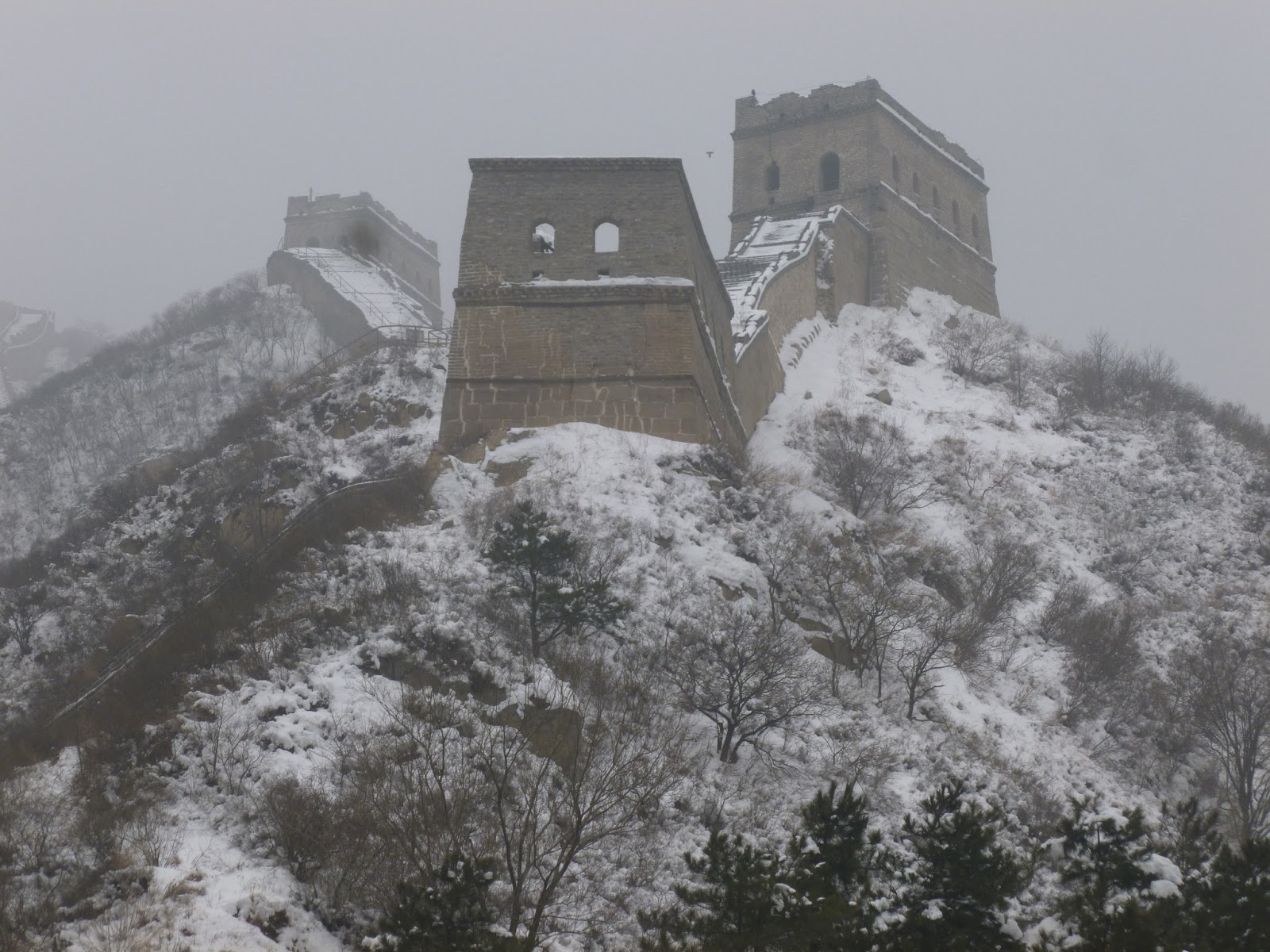
The Great Wall of China. I visited the wall three times during my stay, three different sections, hours apart by car; First the ‘Secret Wall’, which was covered in snow when we went and we were the only ones there, the Jianshaling Wall, the most epic and picturesque part of the wall, and Mutiya, a more touristy though impressive stretch of craggy peaks. There is a reason it is one of the wonders of the world; its mind blowing how extensive it is, and the mountainous terrain it snakes across adds to the grandeur.

Peking Duck: Whole restaurants dedicated to the national dish of China. I ate a whole duck more than once (It was a struggle but I had to; you can’t get single portions and I was by myself).


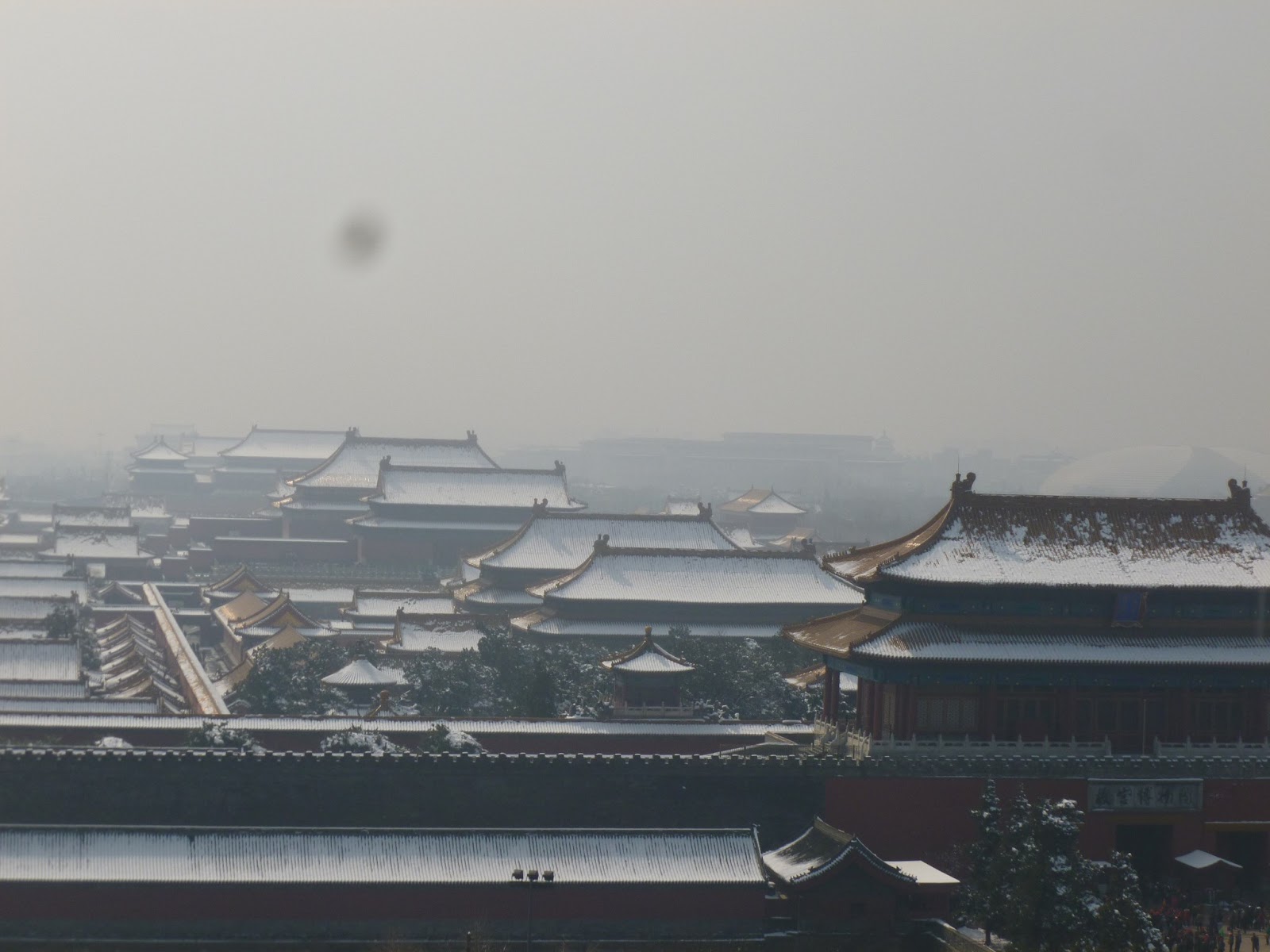
Snow Appreciation Days: In my previous blog I mentioned the smog. It’s bad, but luckily it’s not perpetual; a strong wind or rain or snow will get rid of it for a day or two, and miraculously there will be blue skies. And yes, it did snow, and walking around the old parts of the city and the parks and looking at the heaps of powdery white snow on everything was a highlight (Seeing as the first time I ever saw snow fall was last December in Korea).

Food Markets: from scorpions to starfish and everything in between. I had some snake, and on my final night in Beijing, some dog meat. So mum, tell Toby I ate his cousin and he is next. And if I’m still hungry I’ll drive up to Newcastle and have Murphy. And if I’m still hungry after that I’ll head up to Port Macquarie and have Mojo. Mmm…I’m salivating just thinking about him.


Temples, Parks, Ruins, Markets, Museums…Bookstores. An old theme park which has been sued time and time again by Disneyland and Warner Brothers, and which half the rides are out of order. It was a ghost town – just bizarre. There’s the bootleg DVD’s and the ‘made in china’ junk all over the place. There’s poor people and beggar’s, and rich people with merc’s and the best fashion. Two men might be walking down the street next to each other and one might have on sunglasses that are worth more than the other man’s house. That’s China, 2013.

Skype: I must say that one of the highlights of my stay in Beijing was being able to see a beautiful, albeit slightly pixelated face from all the way around the world. Modern technology blows my mind, and the fact I could talk to Erin at any time, face to face, for free, just amazes me. Talking to her helped me ‘maintain the rage’ for the trip at times I felt I was beginning to wilt. Another highlight for me was talking to Nan and Grandad, Uncool Mark and Aunty Deb, Kels and Mah and Pah, all up at Port Macquarie for Easter. Being bored with no one to talk to in English really made that conversation something of a special occasion for me.

So what else did I do? Apart from sleeping, eating, seeing, doing, reading, writing, walking, not talking, con conning, snow gazing, being glad to be on the road, being homesick, being excited, being discouraged and lonely, being bored, being exhilarated; not much really.

I just lived a simple, slow, easy and mostly happy life for a few weeks.

And then the next phase of the trip through Mongolia and Russia came to mind, and I started to wish I could enjoy the calm before the storm a little longer…


Sunday, April 28, 2013


The Grey    (Beijing, China)

It’s not too often that I’ll get to a place and think, ‘Nah, I could never live here.’ And I’ve been to some pretty messed up countries. But after the first few hours in China I was shaking my head thinking, ‘what the hell is going on?’
Downtown Beijing and the smog
First thing I noticed was the horrendous smog, which not only blocks out the sun and makes the whole city look grey, but can be seen indoors, given the room is large enough. This smog, which is essentially pollution from Beijing’s rampant industrial boom, has led to an epidemic of people in their middle age developing emphysema despite never having touched a cigarette in the whole life.
Portrait of Chairman Mao at Tain'men
Next, a taxi driver tried to charge me 130 dollars U.S. for a ride that took about ten minutes. I couldn’t believe it, what the hell was he thinking? It should have cost closer to 3 dollars US, and that’s what I gave him. He yelled and argued, but when I said that I would be happy to pay the 130 if he came into my hostel and the folks there said it was a fair price, he just mumbled something in Mandarin, waved me off dismissively, and drove away. (And then I had to go look for the place on foot because he dropped me off about a hundred metres away so he didn’t have to drive down a tight alley).
Then, as I went for a walk around the streets to orientate myself with the area, I couldn’t help but notice the intense looking police on every corner and the overabundance of CCTV. Knowing a bit about the one party government and the communist history, it made me realise that the sayings ‘elected by the people, for the people,’ and ‘people shouldn’t be afraid of their governments, governments should be afraid of their people,’ are not the case in China. One of the most influential books I’ve ever read was George Orwell’s ‘1984’ about governmental control and person freedom. That book was a warning, but it obviously wasn’t translated into Chinese.

CCTV overload (on one of few clear days after rain/snow)


We’ve all seen that footage of the guy who stood in front of a tank on the way home from a grocery store. Yeah, well, he was never seen again. In 2008, when Beijing hosted the Olympics, the international governing body of the Olympics (ICCO or something) insisted that China allow protest during the games. Of course, protest is more or less illegal in China, political dissent can attract the punishment of a serious crime, and if you wear a ‘Free Tibet’ shirt you’ll soon come to regret it. Well, the Olympic officials said that it was part of the spirit of the games to allow open protest. So China said, Yeah, okay, we will set up protest zones throughout the city, just to make you happy. The Olympics came and went without a single protest. Maybe the Chinese population is happy with the way everything is going? No, not exactly. If you wanted to protest at one of the protest zones, you had to first apply through the government; you couldn’t just show up. So people did apply, wanting to protest a range of issues. And when they did, the Chinese government put those people on house arrest, so there was no way they could get to the protest zones.  Breathe in that smoggy air, that’s the smell of freedom.
Also, censorship is out of control, with more foreign news websites, YouTube, Facebook and a whole range of websites banned, so the government can control what information enters the country. And that’s scary, that they can choose what they do and do not want their citizens to see. (They even block BlogSpot, which is why this blog is so delayed).
Therefore, as interesting as it was, after just a couple of hours in Beijing, I was thinking ‘nup, this is not my kind of place.’ Give me poverty, decrepit buildings, and poor hygiene. I reckon I could cope with those. But if you take away basic freedoms, the forum for open dialogue and criticism, and the rights of the people, then it’s no better than a jail. Of course, it’s better now than forty years ago, when you were told what job you were going to do by the government, and where you were going to do it, and you couldn’t choose where you lived or to travel abroad. They would get your school results and if you were a dumbass they’d put you on the factory line, and that’s where you would work ‘the rest of the morning, the rest of the afternoon, the rest of your life’ (of course, until the market economy was introduced). Still, today it seems very backwards, making Australia look like a bloody good place to be born, and Japan, so close to China, look Utopic.
This all went through my head in the first few hours I was in China. And maybe, because I was exhausted, uncertain of this strange country and city, annoyed with that bloody taxi driver, and a little homesick, this all looked more horrific than it actually was. But I don’t think so.
Next blog I’ll detail my stay in China and be a little more positive about this undoubtedly interesting country.
See ya!